
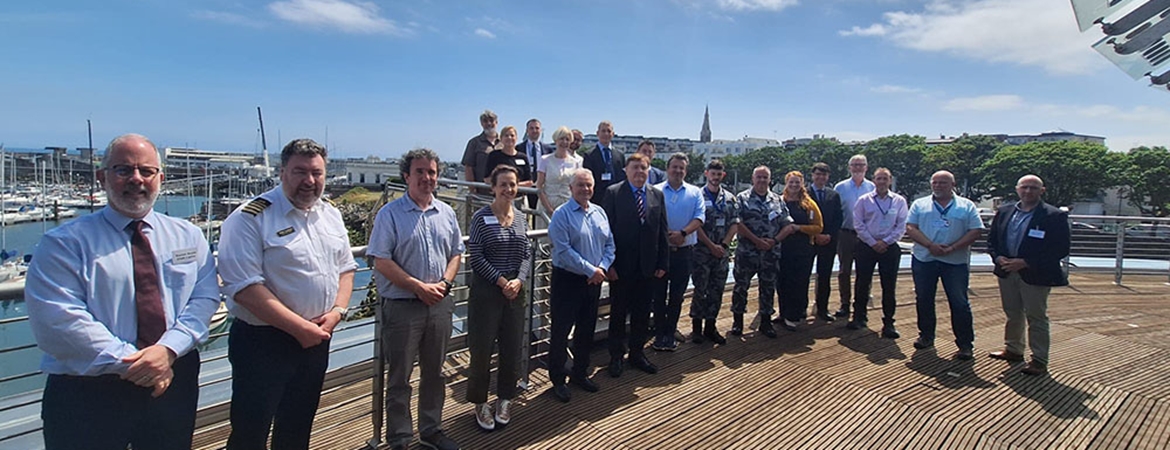
Irish Lights, in conjunction with the General Lighthouse Authorities Research & Development team (GRAD), hosted a workshop on emerging maritime technologies and the future of safe, sustainable, and resilient navigation. The session brought together valuable discussion on the technologies, standards and climate challenges shaping the maritime sector, with a strong focus on resilience, interoperability, and operational safety.
The session featured a discussion on Positioning, Navigation, and Timing (PNT), which is a combination of three distinct capabilities that allow people, ships, and systems to know exactly where they are, how to get to their destination, and the precise time. As maritime users continue to rely heavily on Global Navigation Satellite Systems (GNSS), the workshop explored the need for resilient and complementary PNT solutions in response to emerging vulnerabilities, including interference, technical weaknesses, legacy issues, environmental risks, and wider geopolitical threats. Topics included eLoran, Radar Absolute Position Fixing, VDES R-Mode, inertial navigation systems, quantum sensors, and AIS authentication through VDES. All important areas as the sector considers how best to strengthen navigation assurance.
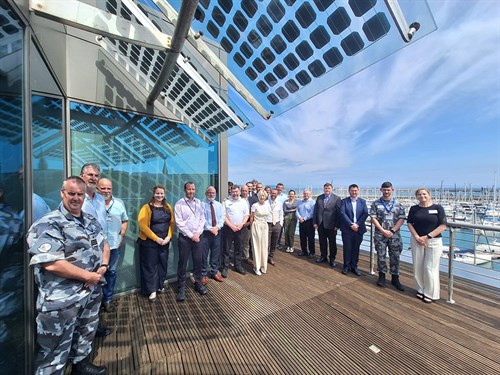
The Technical Operations Director at IALA gave a presentation on the impact of S-100 and S-200 data standards for flag and coastal states, particularly in the context of SOLAS responsibilities. Developed by the International Hydrographic Organisation, S-100 provides a universal digital framework for creating, managing, and exchanging marine geospatial data. It enables a new generation of digital maritime products and services, supporting more consistent, interoperable, and timely information for decision-making at sea. As the sector transitions towards the IHO S-100 framework, secure and trusted exchange of maritime information will become increasingly important. GRAD highlighted how SECOM and the Maritime Connectivity Platform can support encrypted data exchange between maritime stakeholders, helping to provide a foundation for cyber-resilient and internationally interoperable maritime services.
Climate resilience was another important focus. Irish Lights shared insights from its recent climate risk assessment, which covered 300 assets and assessed 24 asset groups against nine climate hazards under current and future climate scenarios. The discussion highlighted risks including coastal flooding, erosion, wave action, extreme weather, and sea-level rise, and reinforced the importance of robust climate data, risk modelling, and adaptation planning.
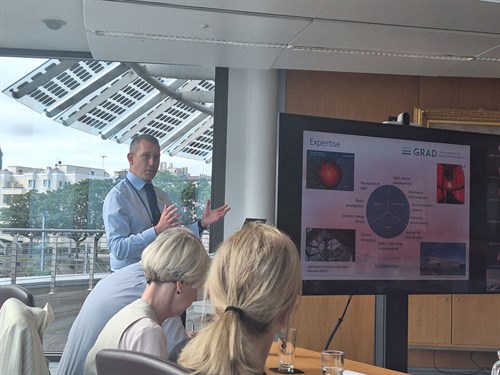
GRAD also outlined its ongoing climate research programme and PhD projects, focused on strengthening forecasting, infrastructure resilience and adaptation planning for lighthouse and navigation assets across Ireland and the UK. The workshop also explored GRAD’s work on modernising lighthouse lighting systems by combining advanced LED technology with traditional optics, improving energy efficiency and reliability while preserving the heritage and performance of lighthouse infrastructure.
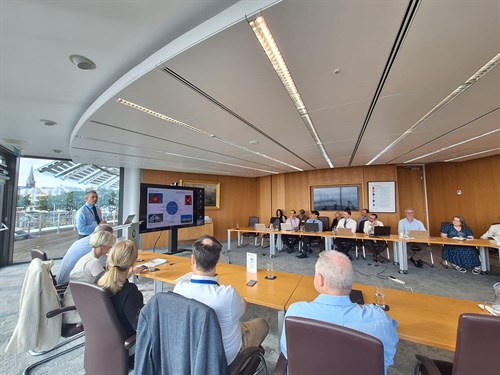
A very worthwhile session and an excellent opportunity to share knowledge, explore emerging challenges and discuss collaboration on the future of maritime safety services.