
Introduction
A new EPA‑funded research initiative, Leveraging Island LiGhthouses and Harnessing Technology to examine Heritage Opportunities in Unique offShore Environments (LIGHTHOUSE), has been launched. This is a unique project internationally, and its objective is to improve knowledge about island biodiversity, climate, habitat and ecosystems and to monitor the impact of the withdrawal from surplus lighthouse infrastructure. Building on Irish Lights’ long-standing stewardship of these remote sites, the project will explore how lighthouse infrastructure can support positive national sustainability and biodiversity goals.
LIGHTHOUSE is a four‑year collaborative project involving Mary Immaculate College, Queen’s University Belfast, University College Dublin, the National Parks and Wildlife Service and Irish Lights, whose offshore estate forms the core study area for the research. The project is funded under the EPA research theme Implementing effective ‘protect and restore’ solutions, with external advisory support from University of Limerick, University College London and the University of Exeter.
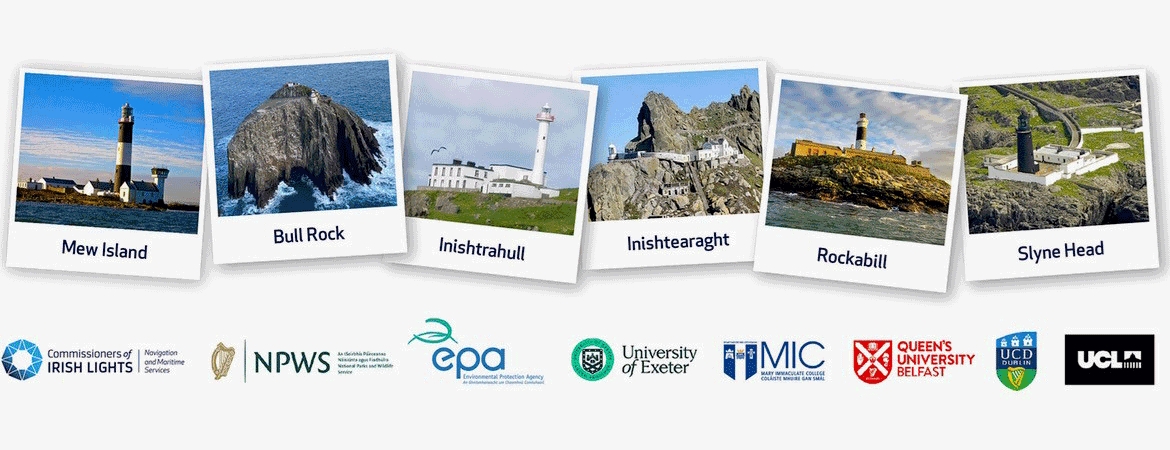
Led by Mary Immaculate College, the project integrates cutting‑edge geospatial mapping, seabird monitoring and innovative approaches to study six of Ireland’s most remote and ecologically significant uninhabited islands. These islands, all of which are owned by Irish Lights, support globally important seabird populations and provide unparalleled natural observatories for detecting environmental change.
For more information on the project funding see:
Project Overview
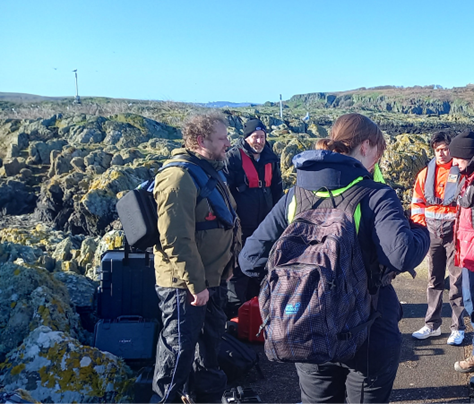
This research project is examining high‑integrity offshore island ecosystems by combining geospatial science, seabird monitoring, transformation of lighthouse buildings and innovative reuse for nature. Focusing on six remote, uninhabited and inaccessible Irish Lights islands, the research will generate natural and cultural heritage baseline data, reveal climate pressures, support policy and pilot scalable conservation approaches that enhance island wilderness, heritage and ecosystem services.
- Islands play a crucial role in marine protection areas. Advanced geospatial technologies are key tools in accurately monitoring and managing these remote island habitats, contributing to Ireland's goal of protecting 30% of its marine environment by 2030.
- Industrial heritage is important, but decommissioning unwanted ancillary buildings creates challenges and opportunities for biodiversity conservation and rehabilitation in remote island settings
- Protecting high-integrity island ecosystems and coastal areas crucial for biodiversity, require strategic actions and ecosystem services accounting.
Research Concept:
The strategic withdrawal of obsolete lighthouse infrastructure from uninhabited offshore islands opens avenues for collecting essential scientific baseline data and unlocking creative conservation opportunities.
Project Objectives
- Improve our knowledge about offshore island environmental and habitat biodiversity character on selected offshore islands
- Understand offshore islands ecosystem service value by reviewing potential options for existing wildlife sites to enhance existing infrastructural features and pilot the valuation of island ecosystem services.
- Explore the impact of decommissioning and withdrawal by recording the built heritage infrastructure and the subsequent reclamation by nature.
Research Questions
- Can geospatial mapping reveal the resilience and vulnerability of coastal islands in response to climate change?
- How can we conceive lighthouse heritage futures and curate/manage the change process?
- What do changing bird migrations reveal about our changing environment?
Why Seabird Communities Matter
Offshore islands sit at the outer edge of Ireland’s landmass and provide critical breeding habitat for seabirds, often located close to productive marine foraging areas. These remote sites support globally important populations of seabirds and play a vital role in sustaining coastal and marine biodiversity.
Taken together, strategically selected offshore islands form a natural network of coastal sites that can be used to monitor bird migration into and out of Ireland, as well as movements through Irish coastal waters to wintering and breeding grounds abroad. Seabird communities therefore act as sensitive indicators of environmental change at both national and international scales.
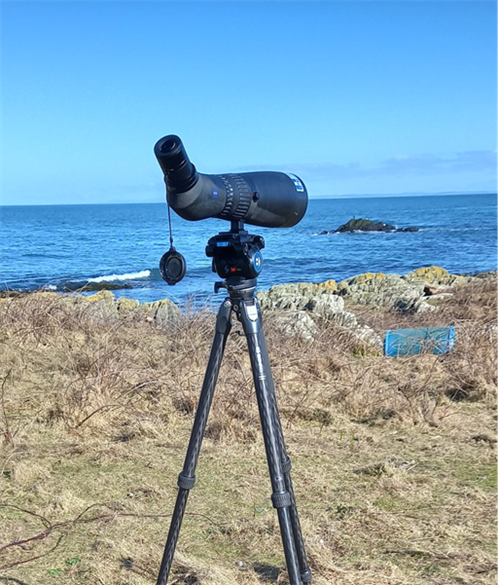
The decommissioning and adaptation of lighthouse buildings creates a unique opportunity to enhance seabird monitoring on offshore islands. Reduced human disturbance, combined with acoustic technology, enables the collection of high‑quality data on breeding and migratory species. At the same time, targeted infrastructure enhancements can support long‑term monitoring of seabird populations, contributing to conservation, research and informed coastal management.
Policy Alignment
The LIGHTHOUSE project will directly advance the objectives of Ireland’s National Biodiversity Action Plan and Climate Action Plan by providing data to support the protection, monitoring and restoration of high‑integrity ecosystems and addressing climate‑related pressures on vulnerable offshore islands.
Supporting adaptive heritage management of coastal and heritage assets is increasingly important in response to sea‑level rise and ocean stressors associated with climate change. Project outputs will provide an evidence base to inform adaptive release targets and actions. These will directly inform Irish Lights’ Manage by Nature policy and it’s 10‑Year Heritage Development and Management Plan, supporting nature‑positive lighthouse site management and scalable, resilient coastal and island governance.
If you would like further information on this project, please contact Project Lead: Prof. Catherine Dalton at Catherine.Dalton@mic.ul.ie
Projects |
|
| Adaptive Heritage Project |  |